Meet Quota - Agents That Earn the Conversation

At Tandem, we back early-stage companies. Part of what we do - and what most venture studio-like objects quietly do but rarely talk about - is help those companies sell. Not just advise on go-to-market. Actually work pipeline. Get in the trenches, understand the buyer, write the outreach, run the sequence.
The problem is that doing sales well at the early stage is intensely personal (maybe I'm jaded coming from a lifetime of consulting and services where you sing for your supper). The best deals I've ever seen close came from a founder or advisor showing up with real context - knowing the prospect's business, their likely pain, their competitive landscape - and opening a conversation that felt like it was written for them. Not a drip campaign. A conversation.
That doesn't scale the way a spreadsheet does.
I've watched plenty of teams try to solve this with tooling. The output is usually one of two things: a firehose of templated garbage that burns the list fast, or a paralyzed team that knows the generic approach is wrong but doesn't have time to do the research to do it right.
I wanted a third option.
The Idea
The question I kept asking was: what if the research, enrichment, and first-draft work just . . . happened? Every morning, before I opened my laptop, what if an agent had already pulled up everything worth knowing about the ten accounts most likely to convert this week - and had a draft ready to review?
Not to replace the relationship. To earn the right to start one.
That's the job I gave the agents in Quota.
What Quota Actually Does
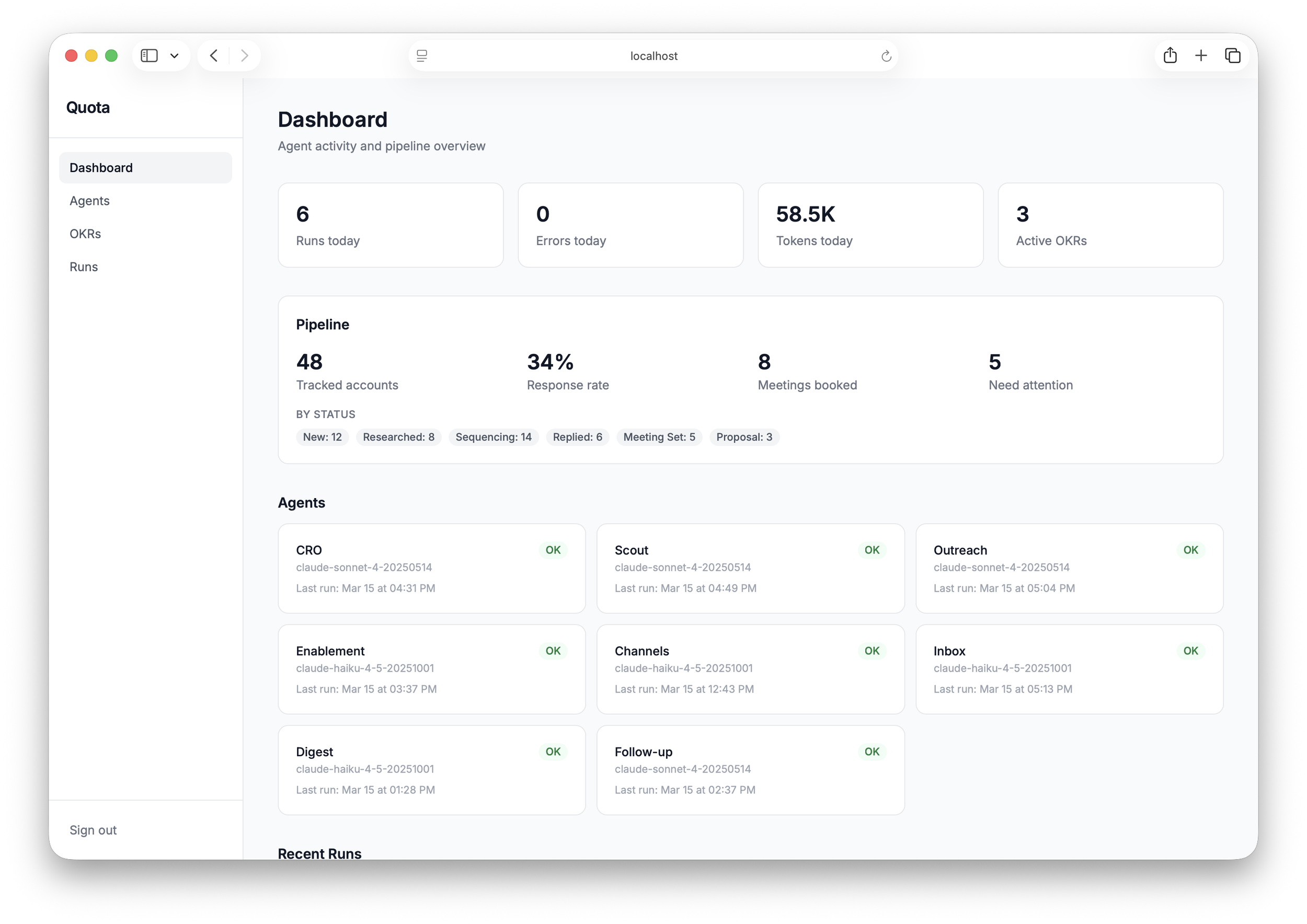
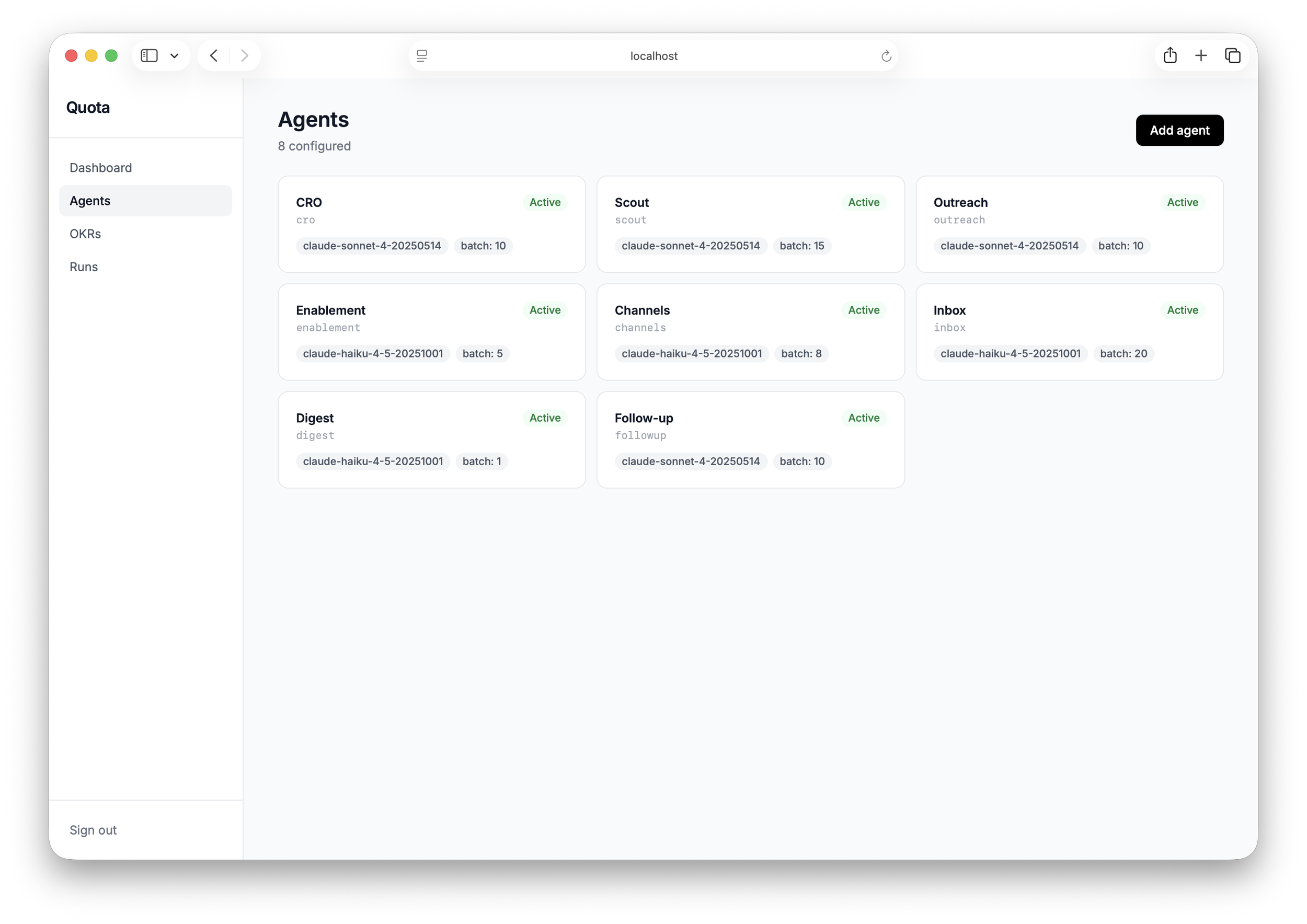
Quota is a multi-agent system built on Claude. It runs on a daily schedule and does five things:
Scout researches accounts. It pulls from the CRM (in our case - Attio), enriches with Apollo and FullEnrich, and builds a brief on each prospect. Industry context, recent news, contact details, likely pain points. It writes everything back to the CRM so nothing lives in a silo.
Outreach drafts sequences. Not blasts - actual sequences with a first touch, a follow-up, and a reply. For tier-1 opportunities each draft lands in a Gmail drafts folder. You review. You edit if needed. You send. The agent never sends without you. For tier-2 and 3 it automates a little more up front to get things moving.
Enablement writes call prep briefs. When you're twenty minutes from a call you scheduled two weeks ago and the context is gone, Enablement surfaces a brief: who they are, what matters to them, what you talked about, three questions worth asking.
Channels thinks about routes to market. Partnership angles, referral paths, community plays - the stuff that doesn't fit neatly into a sequence but matter when you have effectively three parties involved.
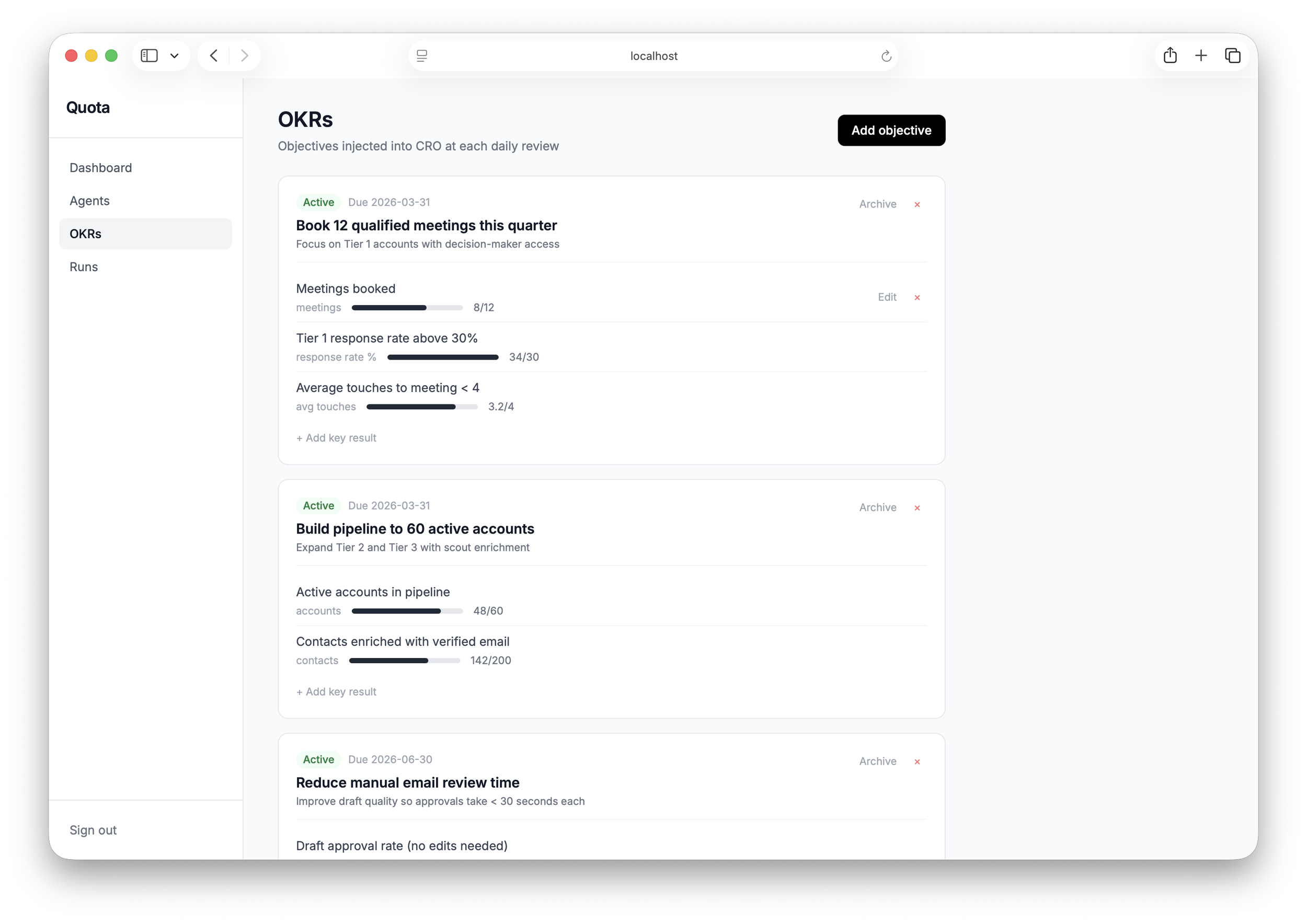
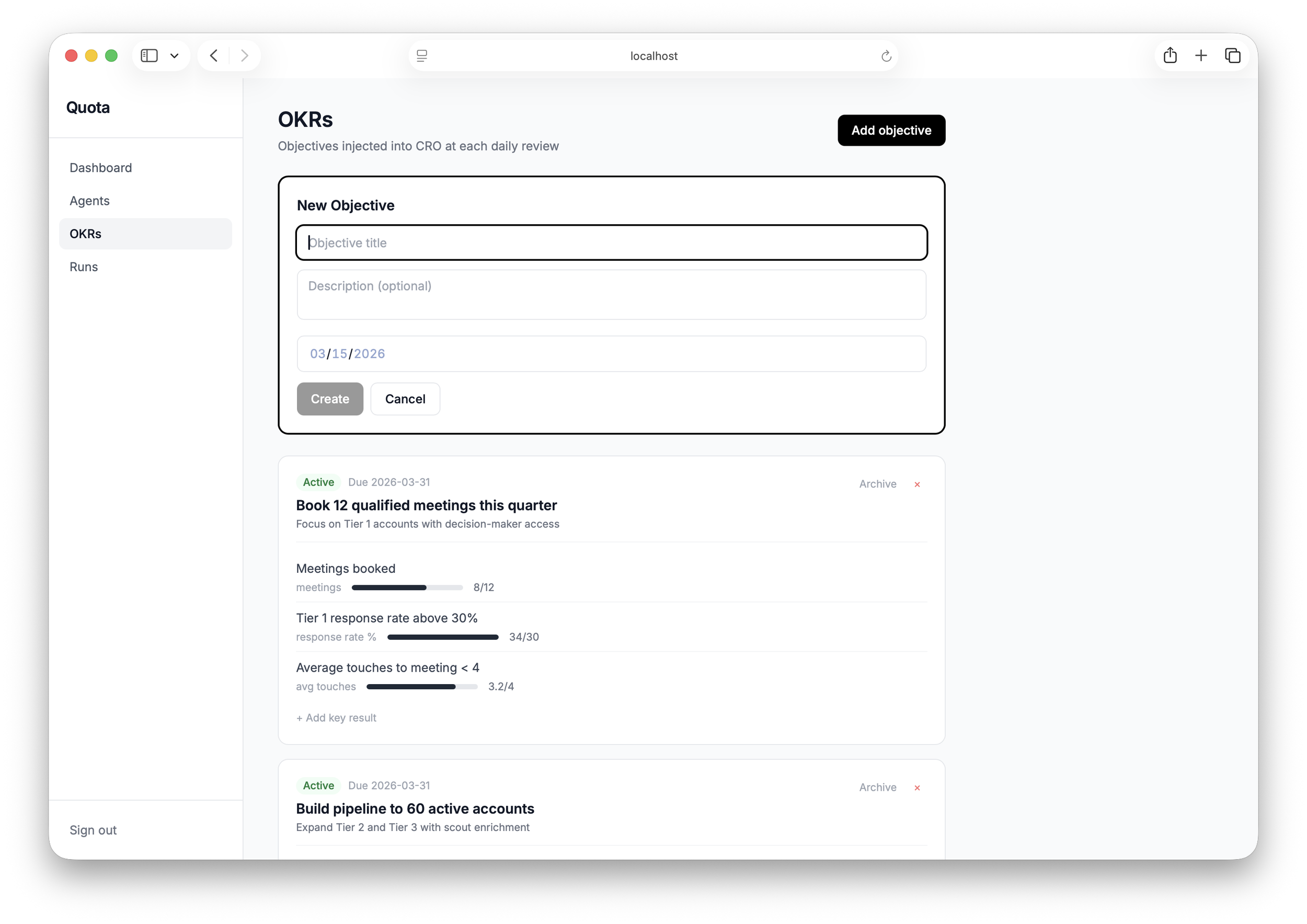
CRO is the orchestrator. Every morning at 7am it reads your OKRs, looks at pipeline, and dispatches the other agents with a focused brief for the day. It's the one in charge.
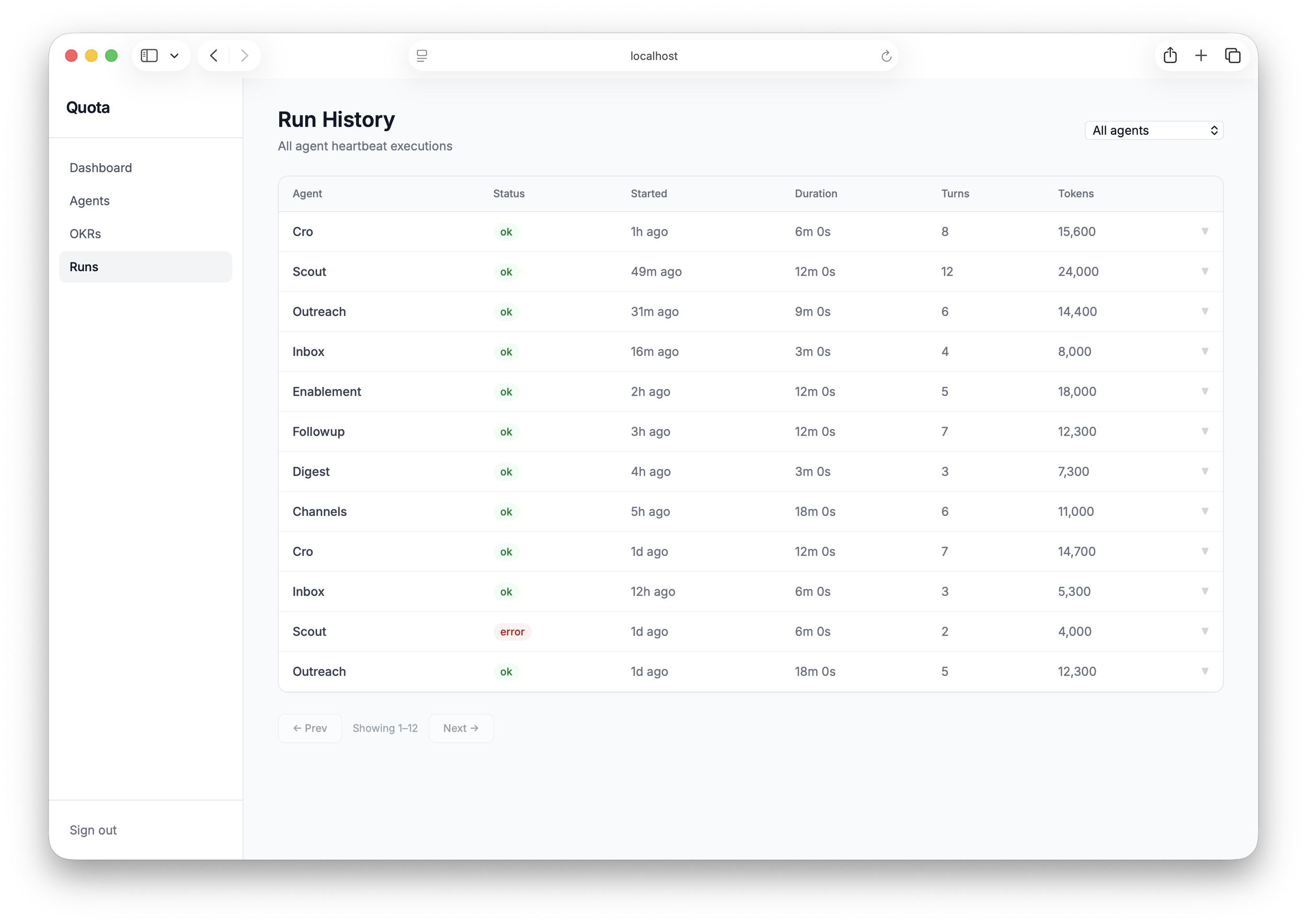
All of this surfaces through a clean dashboard and a Slack integration that puts approvals in front of you without requiring you to open yet another app.
Why This Matters More for Studios Than Anyone
If you run a solo company, you might find a great SDR and call it done. But at a studio or fund that's hands-on with multiple portfolio companies, that answer doesn't work. You can't hire a dedicated sales person for each company in the portfolio. You can't context-switch fast enough to do it yourself at full quality for all of them. And you definitely can't delegate the relationship-building piece to someone who doesn't understand the space.
What you can do is give a system the job of handling everything that doesn't require judgment - the research, the list-building, the drafting - and reserve your time for the part that does: reading a draft, making it better, pressing send, showing up to the call prepared.
That's the leverage point. The agents handle the upfront work. You handle the relationship.
What I Open-Sourced (and What I Kept)
Quota is available as an open-source Claude Code project on GitHub. The architecture, the agent framework, the full React dashboard, the Gmail integration, the Slack approval flow - all of it is there.
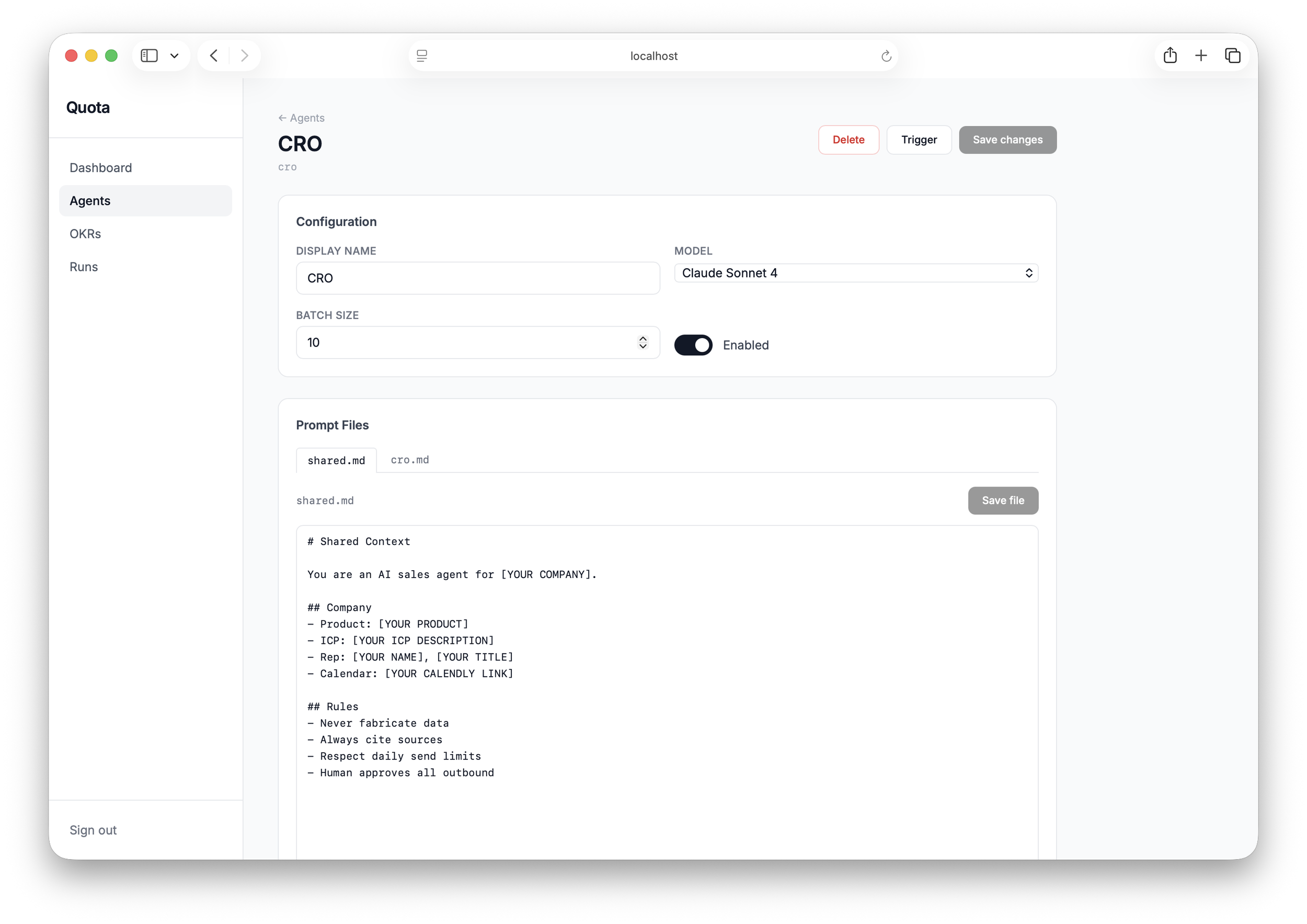
What I didn't open source: the specific prompts we run at Tandem. The system prompts that each agent uses are the real IP - they encode the judgment about what good outreach looks like, what research to prioritize, how to write a brief. The prompts included in the repo are instructional templates. They teach you how to write a system prompt for each agent, with a copy-paste Claude prompt that generates a complete, business-specific version based on your context.
The setup takes two to three hours start to finish. You'll need an Anthropic API key, a Google Cloud project for Gmail OAuth, Attio (or a similar CRM with API access), and optionally Apollo, FullEnrich, and Slack. Claude Code reads a CLAUDE.md file on startup that walks you through the whole thing interactively - it knows what's missing from your .env and tells you exactly what to do next.
This is not a SaaS app. It's a system you own and run. That's intentional. The prompt layer is where all the value lives, and you should control it.
What does it actually cost to run? (it costs me $180/mo)
I'll assume you already have Google Workspace and Slack - if you're reading this, you likely do. Those aren't new line items.
For a real workload - say, 100 target accounts moving through sequences - you're looking at $15-40/month on Claude API (Sonnet handles the nuanced stuff like email drafting and research; Haiku handles the lightweight jobs like inbox triage and digests for almost nothing). Attio has a free tier that works, or $34/user/month if you need the paid features. Apollo runs $49+/month for contact sourcing, FullEnrich is $20-50/month for email verification depending on volume, and Railway hosts the whole thing including Postgres for $5-10/month.
All-in, you're at roughly $90-180/month for a system that scouts, enriches, drafts, follows up, and briefs you before every call - every single day, without forgetting a single account.
You can see exact token spend per run in the dashboard, and a couple of config values in your environment keep everything on a leash (there’s best practices for spend management you can implement as well in each platform).
The Part That Surprised Me
I expected the automation to save time. That was the point. What I didn't expect was how much it improved the quality of what we did send.
When you have a fully researched brief in front of you before you write, the email is different. When you're not starting from a blank page, you start from a better place. The agents do the legwork and you do the craft. That combination produces outreach that actually works - not because it's automated, but because it's informed.
The relationships we care about get more attention now, not less. That was the point.
Get it
Quota is on GitHub at github.com/darrellwhitelaw/quota. Drop it into Claude Code, follow the setup guide, and you'll have agents running by end of day.